
Bears 7, Packers 31: Five Turnovers and a Collapse at Lambeau Field
Week 5 NFL 2026 Bears vs. Packers Recap: Chicago lost five fumbles, Jordan Love threw for 367 yards and Green Bay won 31-7 at Lambeau Field.
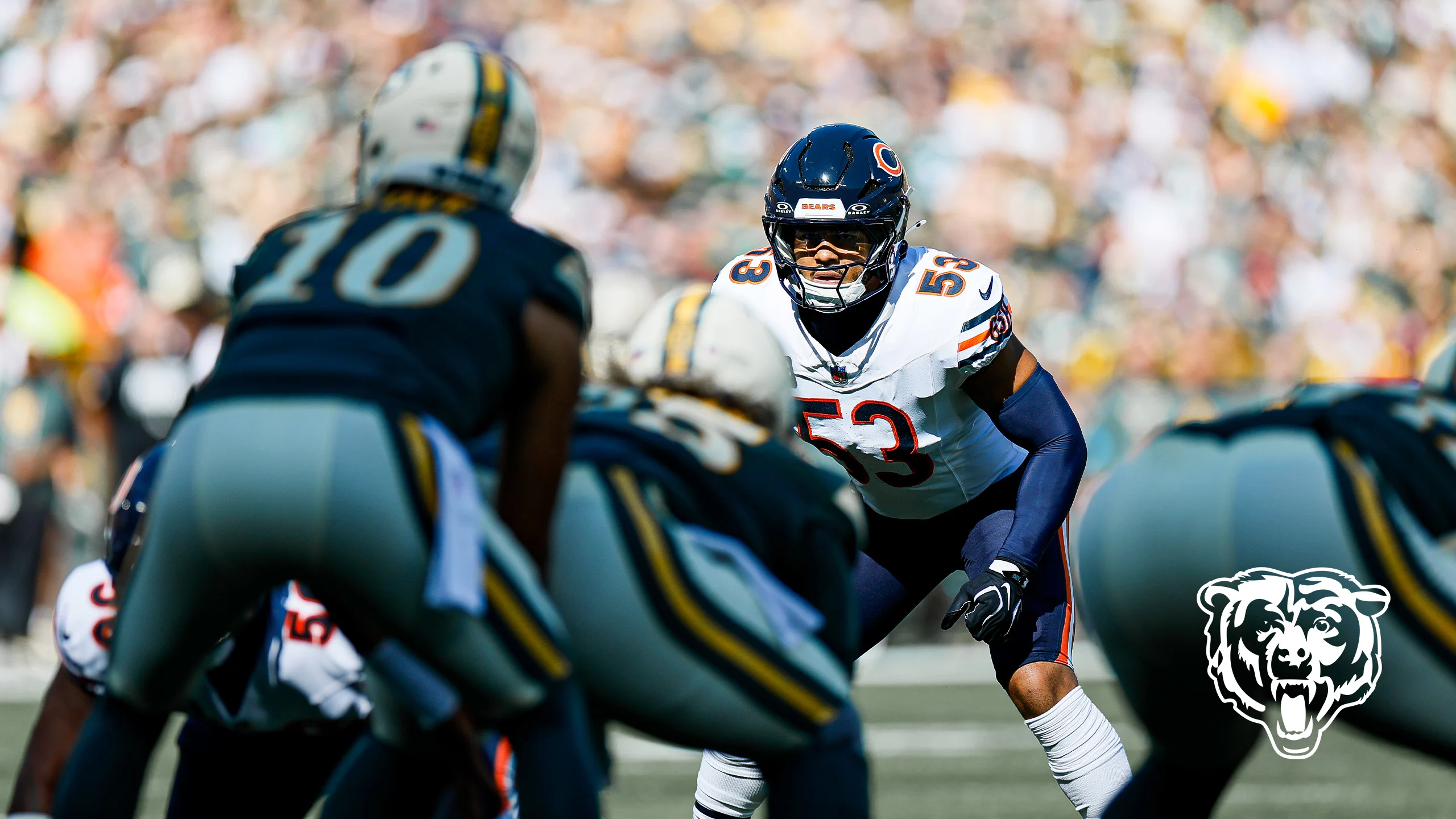
A week after controlling the ball for nearly 43 minutes against the Jets, the Chicago Bears lost control of almost everything at Lambeau Field.
Green Bay converted five turnovers, four explosive passes and a flawless performance from Jordan Love into a 31-7 victory. Chicago fell to 3-2 and once again proved that depth at the quarterback position can sustain a team for a few weeks, but not indefinitely replace its starter.
The loss was not solely the fault of Tyson Bagent or Case Keenum. The offense produced just 246 yards, the running game lost its identity without Kyle Monangai and the defense allowed 428 yards. The Packers were better on both lines, protected the ball and punished every deep error from the secondary.
It was not a close matchup between divisional rivals. It was Chicago’s worst game of the season so far.
Two Hits Before Chicago Could Establish Itself
Green Bay set the tone on their first possession. Starting from their own 9-yard line, they gained 91 yards in ten plays and opened the scoring with a 42-yard pass from Love to Christian Watson, completely open on the sideline.
Chicago’s response lasted two plays. A pass from Bagent intended for Luther Burden III was deflected by Javon Bullard and ended in the hands of Xavier McKinney. The Packers took advantage of the short field and MarShawn Lloyd scored on the ground to put the score 14-0 at the start of the second quarter.
For a moment, the Bears regained the formula that had sustained them in the previous weeks. They built a series of 16 plays, 78 yards and 9:10 of duration, with four third down conversions. On fourth and goal from the 1-yard line, D’Andre Swift crossed the plane to cut the deficit to 14-7.
It was the only touchdown for Chicago. It was also the only possession in which the offense seemed to control the tempo of the game.
The Third Down That Split the Game
The decisive play came at the start of the second half. Green Bay faced third and 22. A touchdown by J. Michael Sturdivant had just been nullified by offensive interference and the Chicago defense had an ideal opportunity to force a punt.
Instead, Love threw deep and Watson caught the ball over Dillon Thieneman for a 53-yard touchdown. The score became 20-7 and the defense wasted the opportunity to return the ball to an offense that had closed the first half well.
It was not an isolated incident. The Bears allowed passes of 53, 50 and 46 yards, as well as the 42-yard touchdown in the first quarter. Green Bay used the play-action with great efficiency: Love completed 10 of 11 play-action passes for 228 yards.
The secondary committed errors in angle and communication, but the responsibility was collective. When Love had time, he attacked the deep part of the field without fear; when the pressure came, it was too sporadic to change the game.
“Defensively, we allowed the ball to pass over us too many times: four passes of 40 yards or more”.
— Ben Johnson, in post-game statements.
Christian Watson finished with six receptions, 143 yards and two touchdowns. The rookie Matthew Golden added 123 yards and received the two-point conversion that sealed the 31-7 score. Love completed 25 of 31 passes for 367 yards, two touchdowns and a 137.5 rating.
Five Turnovers and Four Consecutive Lost Possessions
Chicago still had a chance in the third quarter, but Cairo Santos missed a 43-yard field goal. Then came the collapse: the Bears lost the ball in four consecutive possessions.
Tyson Bagent finished with 87 yards and two interceptions before being substituted. Case Keenum initially moved the offense, but threw another interception in the red zone and then lost the ball after a sack. Rome Odunze committed the other fumble.
Green Bay won 5-0 in the rushing battle. No offense survives such a difference.
The Running Game Lost Its Identity
Chicago came in as the NFL leader with 196.3 rushing yards per game and left Lambeau with barely 81 in 24 attempts.
The absence of Kyle Monangai due to a foot injury weighed, but it doesn’t explain everything. D’Andre Swift produced 43 yards and the only touchdown; the rest of the attack never found continuity. The line didn’t generate the same push and the disadvantage forced the team to gradually abandon the run.
Johnson summed it up after reviewing the video: neither the running game nor the passing game worked as designed.
Booker and Thomas: Two Contributions Within the Collapse
There were individual performances that were salvageable, although none were enough to change the outcome.
Austin Booker sacked Love on consecutive plays at the end of the first half. He finished with two sacks, three tackles for loss and a forced fumble. It was the only stage of the game in which defensive pressure forced Green Bay to retreat consistently.
On special teams, the rookie Zavion Thomas accumulated 192 yards on six kickoff returns, including a 61-yard return. His explosiveness gave Chicago favorable field positions that the offense failed to convert into points.
These contributions deserve recognition, but they should not disguise the reality: when a team loses by 24 points and turns over the ball five times, individual flashes are reduced to marginal notes.
A Defense That Also Came Out Injured
The afternoon worsened with several injuries. The linebacker T.J. Edwards left the game during the first half due to a hamstring issue. In the second half, Dayo Odeyingbo exited with a quadriceps injury and Tyrique Stevenson, also due to a hamstring issue. Cam Lewis also had to leave the game, although the team did not immediately provide a detailed diagnosis.
The availability of these players will be important for a defense that has already shown depth issues. Chicago went from allowing only two touchdowns in their previous three games to giving up four touchdowns and multiple explosive passes in Green Bay.
It is not convenient to attribute everything to the injuries: several of the big plays occurred before the unit was depleted. But the injuries complicated the adjustments and left Dennis Allen with fewer options while the Packers continued to attack vertically.
Caleb is close, but there is no guaranteed date
The attention inevitably turns to Caleb Williams, who has lost three games due to a hamstring injury. The third-year quarterback returned to practice on limited terms before the trip to Green Bay and performed movement and throwing drills during warm-ups.
Johnson said Caleb continues to progress and that his return could occur in Atlanta or after. That means he is close; it does not mean he is cleared to play. The coaching staff will wait for medical approval before making a decision.
If Williams is not available, the Bears will also have to determine who will lead the offense. Johnson said on Monday that he was still evaluating Bagent and Keenum and that it had not been determined which would work with the first unit.
The return of Caleb would elevate the offensive ceiling, but it would not correct by itself the broken coverages, the lack of consistent pressure, or the ball protection. The problem at Lambeau was a team-wide issue.
The Columnist’s Note
A loss does not make the season a crisis. However, starting 0-2 within the NFC North significantly reduces the margin for error. And the way of losing in Lambeau Field demands even more attention than the result itself.
Chicago had shown it could win with backup quarterbacks, rely on the run and control games through possession. Green Bay eliminated each of these supports: stopped the running game, confused Bagent, punished Keenum and repeatedly attacked the deep part of the defense.
The Packers did not have to choose between dominating physically or exploiting the mistakes. The Bears allowed them to do both. For moments, the version of the team before the arrival of Ben Johnson reappeared: fragile after the first mistake, unable to respond to the next hit and trapped in a game whose tempo was dictated by the opponent.
The first question is in the most important position. If Caleb Williams does not receive medical clearance to face Atlanta, it is not clear that Tyson Bagent should retain the starting role. His history shows a concerning trend with turnovers: he threw six interceptions in four starts during 2023 and adds three more in his two starts this season. Case Keenum also did not present a convincing argument in Green Bay. The decision, therefore, is not about choosing a perfect solution, but about determining which of the two imperfect options offers greater control of the game.
The defensive doubts are even deeper. Shemar Turner, a second-round pick in 2025, continues to be an unreliable piece. Tyrique Stevenson returned for the same injury, while the current level of Jaylon Johnson is far from the standard of a cornerback hired to neutralize the best opposing receiver. Green Bay attacked their coverage without the respect they previously inspired. When the quarterback pressure does not arrive, the weaknesses of the secondary are completely exposed.
Not all the responsibility belongs to the players or the current coaching staff. The fragility of this defense also forces a review of the roster construction. Ryan Poles has invested draft capital without yet achieving sufficient defensive production. Choosing the tight end Sam Roush in the third round can be understood as part of the offensive plan, but the decision will inevitably be questioned while the secondary lacks depth and the team continues to seek consistent pressure on the quarterback. It is not about blaming a rookie for the problems of an entire unit, but about evaluating the priorities with which the roster was built.
There is also a number that Ben Johnson must start to correct: since his arrival, Chicago has barely two regular season wins against divisional rivals. The context matters — the Bears won the NFC North and eliminated Green Bay in the playoffs last season —, but a team that wants to repeat as a divisional champion cannot keep giving ground within its own division.
Not everything was so good after three consecutive wins nor everything is lost after this loss. But Lambeau stopped showing hypothetical problems: the quarterback uncertainty, a defense sustained by injuries and shallow depth, the lack of pressure and the turnovers are now concrete issues.
The visit to Atlanta will reveal whether the loss was an exception or the first sign of deeper difficulties. Before talking about a comeback, the Bears need to demonstrate that they still know how to respond when the game stops obeying their script.
Bear Down.